Course outline — 100 minutes across 6 modules
- Why Liens Exist — the Chapter 44A Toolkit · ≈ 17 min
- The Lien Agent: Designation and the $40,000 Threshold · ≈ 17 min
- Information Flows: Who Must Tell Whom, and When · ≈ 16 min
- Perfecting the Claim: 120 Days, the Right Courthouse · ≈ 17 min
- Enforcement, Priority, and the Clock · ≈ 16 min
- Lien Risk Management for the Licensed GC · ≈ 17 min
MODULE 2 OF 6 · ESTIMATED 17 MIN
The Lien Agent: Designation and the $40,000 Threshold
Learning objectives
- State the current dollar threshold that triggers the owner’s duty to designate a lien agent, and cite the session law that set it.
- Identify when the designation must occur, who may serve as a lien agent, and where lien agents are registered.
- Apply the owner-occupied single-family-residence exemption to project scenarios.
Lesson
DRAFT — pending instructor-of-record approval
The mailbox the market built
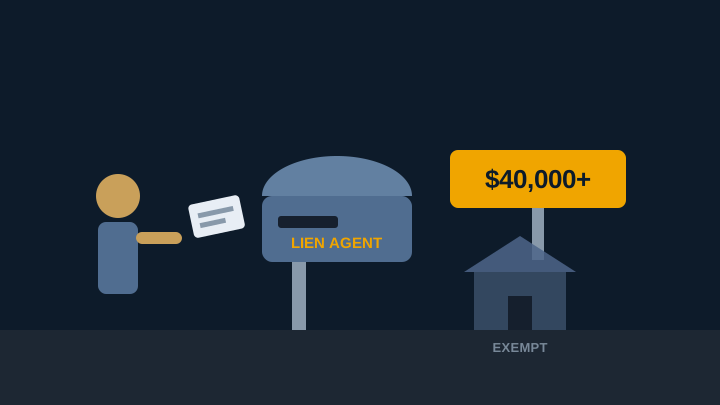
The lien agent system answers a practical question that used to plague North Carolina closings: with liens able to arise from dozens of unseen subcontractors and suppliers, how can an owner, a buyer, or a title insurer know who might have claims against a project? Section 44A-11.1’s answer is a designated central point of notice. Before work begins, the owner appoints a LIEN AGENT — chosen from a registry of title insurance companies and agencies maintained under the Department of Insurance system, operated in practice through the LiensNC platform. Everyone in the chain then has one address: potential claimants send their early notices to the lien agent, and the owner and title insurer can identify potential lien claimants early, while the project is still live, instead of discovering them at closing.
Authority: N.C.G.S. § 44A-11.1
The threshold — and the one $30,000 that survived
The designation duty is triggered by project value. Under § 44A-11.1(a), the owner must designate a lien agent for an improvement whose total cost is FORTY THOUSAND DOLLARS ($40,000) or more. That figure has been the law since OCTOBER 1, 2023, when Session Law 2023-108 (House Bill 488), section 2(h) raised the trigger from its long-standing $30,000. Read the whole act and the design becomes clear: the same session law moved two sibling thresholds on the same day — the § 87-1 general-contractor licensure floor at s. 2(a), and the § 87-14 permit-proof duty at s. 2(b). Three statutes, one act, one effective date. So the practical risk is not that your numbers disagree with each other; it is that ALL THREE are stale together. Any checklist, contract template, or permit-desk habit formed before October 2023 says $30,000 in every one of those places, and it is wrong in every one of them. Now the trap. Section 44A-11.1 STILL CONTAINS a thirty-thousand-dollar figure — in subsection (a1), which was not amended and does not state the designation trigger. It addresses a narrow case: where improvements to a real property leasehold are limited to the purchase, transportation, and setup of a manufactured home with a current certificate of title, the home's PURCHASE PRICE is excluded when determining whether the cost of the undertaking meets the statutory threshold. That is an exclusion rule about what counts toward the cost, not the cost that triggers designation. Finding $30,000 in the lien-agent statute is therefore not evidence that your $40,000 is out of date — it is a different subsection answering a different question.
Authority: N.C.G.S. § 44A-11.1 · N.C.G.S. § 87-1 · N.C.G.S. § 87-14
When the designation must happen
Timing is as important as the threshold. The owner must designate the lien agent NO LATER THAN the time the owner first contracts with any person to improve the real property — and where a building permit is required, the designation is tied to permit issuance. Notice what that ordering means on the ground: designation is a project-setup act that precedes mobilization, not a formality handled at closing. The cost measurement is made when the obligation attaches — at original permit issuance, or when the improvement contract is entered into where no permit is required. A general contractor is not the party who designates, but you are the party most often standing at the permit counter and the first to see the contract signed, which is why the statute’s information duties — module 3 — route through you.
Authority: N.C.G.S. § 44A-11.1
Who can be a lien agent
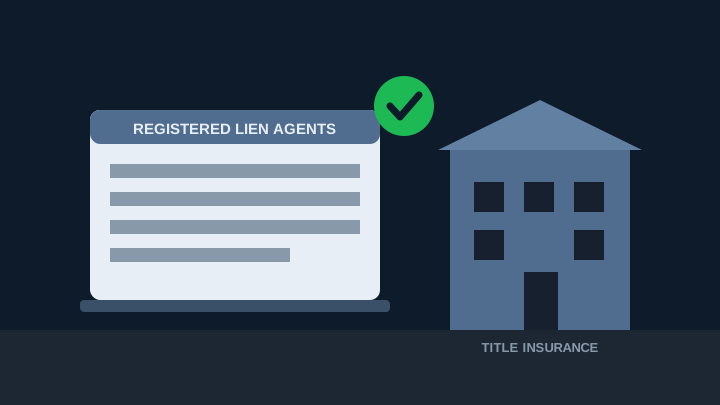
Not anyone. The lien agent must be selected from the list of registered lien agents — title insurance companies and title insurance agencies — maintained under the North Carolina Department of Insurance framework, accessed in practice through the LiensNC system. The registry model is deliberate: title insurers are the institutions that already examine titles, insure over lien risk, and process project notices at scale. Appointing a professional, registered notice-recipient makes the early-notice system dependable in a way an ad-hoc appointee never could be. And be precise about what the designation does NOT do: designating a lien agent does not make that agent the owner’s representative for receiving a Claim of Lien on Real Property or other litigation papers — the agent’s role is receiving the specific notices the lien-agent statutes route to it.
Authority: N.C.G.S. § 44A-11.1
The homeowner exemption
Section 44A-11.1 carves out one significant exemption: the owner is NOT required to designate a lien agent for improvements to an existing single-family residential dwelling unit that the owner occupies as a residence (the exemption extends to certain accessory buildings and structures). The policy is burden reduction for homeowners — a family remodeling the kitchen of the house they live in should not need to hire a title company’s notice service. Read the elements tightly, because each one limits the exemption: EXISTING (new construction of a dwelling is not exempt), SINGLE-FAMILY (multifamily is not), OWNER-OCCUPIED AS A RESIDENCE (a rental house or flip is not). A $60,000 renovation of an occupied family home needs no lien agent; a $60,000 renovation of that same floor plan held as a rental does. And the exemption removes only the designation duty — the underlying Chapter 44A lien rights of everyone working on that home remain fully intact, preserved through the article’s other notice mechanisms.
Authority: N.C.G.S. § 44A-11.1
Worked example — the threshold in a change-order world
Thresholds are decided at pricing, then tested again at every change. A rental-property owner signs you for a $37,500 detached garage — below $40,000, no designation duty, and no lien agent is appointed. Six weeks in, the owner adds a finished loft for $9,200. The undertaking is now $46,700. Ask the two questions again immediately: is the total cost of the undertaking $40,000 or more, and does the owner-occupied existing single-family exemption apply? Here the answer is yes and no — over threshold, and a rental is not the owner’s residence — so the designation duty has attached, and your subcontractors need the agent’s information within three business days of contracting. The disciplined move is to price change orders with the threshold questions attached to the estimate, so an owner never learns about a designation duty after the concrete is poured.
Authority: N.C.G.S. § 44A-11.1
Working the threshold in the field
Apply the current rule to the projects on your desk. A $38,000 detached-garage build for an investor client: below $40,000 — no designation duty (watch change orders; module 6 returns to threshold creep). A $95,000 tenant upfit in a strip center: commercial, over threshold — the owner designates before first contract, and your subs will need the agent’s information from you. A $52,000 addition to a house the owner rents out: over threshold and NOT owner-occupied — designation required; the family-home instinct does not transfer to rental stock. A $200,000 whole-house remodel for a family living in the home through construction: exempt, regardless of value. The discipline is a two-question test run at pricing time, before contract signature: is the total cost of the undertaking $40,000 or more, and does the owner-occupied-existing-single-family exemption apply? Two questions, asked early, keep both you and your owner on the right side of § 44A-11.1.
Authority: N.C.G.S. § 44A-11.1
Traducción de cortesía — la versión en inglés es la oficial del curso.
El buzón que construyó el mercado
El sistema del agente de gravámenes responde a una pregunta práctica que solía atormentar los cierres inmobiliarios en Carolina del Norte: si los gravámenes pueden surgir de decenas de subcontratistas y proveedores invisibles, ¿cómo puede un propietario, un comprador o una aseguradora de títulos saber quién podría tener reclamaciones contra una obra? La respuesta de la sección 44A-11.1 es un punto central de aviso designado. Antes de que comience el trabajo, el propietario nombra un AGENTE DE GRAVÁMENES — elegido de un registro de compañías y agencias de seguros de título mantenido bajo el sistema del Departamento de Seguros, operado en la práctica a través de la plataforma LiensNC. Todos en la cadena tienen entonces una sola dirección: los posibles reclamantes envían sus avisos tempranos al agente de gravámenes, y el propietario y la aseguradora de títulos pueden identificar temprano a los posibles reclamantes, mientras la obra sigue activa, en lugar de descubrirlos en el cierre.
El umbral — y el único $30,000 que sobrevivió
El deber de designación se activa por el valor de la obra. Bajo el § 44A-11.1(a), el propietario debe designar un agente de gravámenes para una mejora cuyo costo total sea de CUARENTA MIL DÓLARES ($40,000) o más. Esa cifra es la ley desde el 1 DE OCTUBRE DE 2023, cuando la Ley de Sesión 2023-108 (Proyecto de Ley 488 de la Cámara), sección 2(h), elevó el disparador desde los $30,000 vigentes por largo tiempo. Al leer la ley completa se ve el diseño: la misma ley de sesión movió dos umbrales hermanos el mismo día — el piso de licencia de contratista general del § 87-1 en la s. 2(a), y el deber de acreditación en el permiso del § 87-14 en la s. 2(b). Tres estatutos, una ley, una fecha de vigencia. Así que el riesgo práctico no es que sus cifras se contradigan entre sí; es que LAS TRES estén desactualizadas juntas. Cualquier lista de verificación, plantilla de contrato o costumbre del mostrador de permisos formada antes de octubre de 2023 dice $30,000 en cada uno de esos lugares, y está equivocada en todos ellos. Ahora la trampa. La sección 44A-11.1 TODAVÍA CONTIENE una cifra de treinta mil dólares — en la subsección (a1), que no fue reformada y que no establece el disparador de la designación. Aborda un caso estrecho: cuando las mejoras a un derecho de arrendamiento sobre bien inmueble se limitan a la compra, el transporte y la instalación de una casa prefabricada con certificado de título vigente, el PRECIO DE COMPRA de la casa se excluye al determinar si el costo de la obra alcanza el umbral legal. Esa es una regla de exclusión sobre qué cuenta para el costo, no el costo que activa la designación. Por lo tanto, encontrar $30,000 en el estatuto del agente de gravámenes no es prueba de que su cifra de $40,000 esté vencida — es una subsección distinta que responde una pregunta distinta.
Cuándo debe ocurrir la designación
El momento importa tanto como el umbral. El propietario debe designar al agente de gravámenes A MÁS TARDAR cuando el propietario contrate por primera vez con cualquier persona para mejorar el bien inmueble — y cuando se requiere permiso de construcción, la designación se vincula con la emisión del permiso. Observe lo que ese orden significa en la práctica: la designación es un acto de preparación de obra que precede a la movilización, no una formalidad que se atiende en el cierre. La medición del costo se hace cuando nace la obligación — en la emisión del permiso original, o cuando se celebra el contrato de mejora si no se requiere permiso. El contratista general no es la parte que designa, pero usted es la parte que con más frecuencia está frente al mostrador de permisos y la primera en ver firmado el contrato, y por eso los deberes de información del estatuto — módulo 3 — pasan por usted.
Quién puede ser agente de gravámenes
No cualquiera. El agente de gravámenes debe seleccionarse de la lista de agentes de gravámenes registrados — compañías y agencias de seguros de título — mantenida bajo el marco del Departamento de Seguros de Carolina del Norte, consultada en la práctica a través del sistema LiensNC. El modelo de registro es deliberado: las aseguradoras de títulos son las instituciones que ya examinan títulos, aseguran contra el riesgo de gravámenes y procesan avisos de obra a escala. Nombrar a un receptor de avisos profesional y registrado hace que el sistema de aviso temprano sea confiable de una forma que un designado improvisado nunca podría lograr. Y sea preciso sobre lo que la designación NO hace: designar un agente de gravámenes no convierte a ese agente en representante del propietario para recibir una Reclamación de Gravamen sobre Bienes Inmuebles u otros documentos de litigio — el papel del agente es recibir los avisos específicos que los estatutos del agente de gravámenes le encaminan.
La exención del propietario de vivienda
La sección 44A-11.1 establece una exención significativa: el propietario NO está obligado a designar un agente de gravámenes para mejoras a una unidad de vivienda residencial unifamiliar existente que el propietario ocupa como residencia (la exención se extiende a ciertos edificios y estructuras accesorias). La política busca reducir la carga sobre los propietarios de vivienda — una familia que remodela la cocina de la casa donde vive no debería tener que contratar el servicio de avisos de una compañía de títulos. Lea los elementos con rigor, porque cada uno limita la exención: EXISTENTE (la construcción nueva de una vivienda no está exenta), UNIFAMILIAR (la multifamiliar no lo está), OCUPADA POR EL PROPIETARIO COMO RESIDENCIA (una casa de alquiler o una reventa no lo está). Una renovación de $60,000 en una vivienda familiar ocupada no necesita agente de gravámenes; una renovación de $60,000 del mismo plano mantenido como alquiler sí. Y la exención elimina únicamente el deber de designación — los derechos de gravamen del Capítulo 44A de todos los que trabajan en esa vivienda permanecen plenamente intactos, preservados mediante los demás mecanismos de aviso del artículo.
Ejemplo práctico — el umbral en un mundo de órdenes de cambio
Los umbrales se deciden al presupuestar y luego se vuelven a probar en cada cambio. El dueño de una propiedad de alquiler lo contrata por un garaje independiente de $37,500 — por debajo de $40,000, sin deber de designación, y no se nombra agente de gravámenes. Seis semanas después, el propietario agrega un altillo terminado por $9,200. La obra asciende ahora a $46,700. Vuelva a hacer de inmediato las dos preguntas: ¿el costo total de la obra es de $40,000 o más, y aplica la exención de vivienda unifamiliar existente ocupada por el propietario? Aquí la respuesta es sí y no — supera el umbral, y un alquiler no es la residencia del propietario — de modo que el deber de designación ya nació, y sus subcontratistas necesitan la información del agente dentro de tres días hábiles desde la contratación. La conducta disciplinada es presupuestar las órdenes de cambio con las preguntas del umbral adjuntas a la estimación, para que un propietario nunca se entere de un deber de designación después de vaciado el concreto.
Aplicando el umbral en el campo
Aplique la regla vigente a las obras que tiene sobre el escritorio. Un garaje independiente de $38,000 para un cliente inversionista: por debajo de $40,000 — sin deber de designación (vigile las órdenes de cambio; el módulo 6 vuelve sobre el desplazamiento del umbral). Una adecuación de local de $95,000 en un centro comercial: comercial, por encima del umbral — el propietario designa antes del primer contrato, y sus subcontratistas necesitarán de usted la información del agente. Una ampliación de $52,000 a una casa que el propietario alquila: por encima del umbral y NO ocupada por el propietario — se requiere designación; el instinto de la vivienda familiar no se traslada al inmueble de alquiler. Una remodelación integral de $200,000 para una familia que vive en la casa durante la obra: exenta, sin importar el valor. La disciplina es una prueba de dos preguntas aplicada al momento de presupuestar, antes de la firma del contrato: ¿el costo total de la obra es de $40,000 o más, y aplica la exención de vivienda unifamiliar existente ocupada por el propietario? Dos preguntas, hechas temprano, lo mantienen a usted y a su propietario del lado correcto del § 44A-11.1.
Authority & state references
- N.C.G.S. § 44A-11.1 — Lien agent; designation and duties ⏱ ≈ 6 min read
- S.L. 2023-108 (H.B. 488), s. 2(h) — Session Law 2023-108 (House Bill 488) — s. 2 raises the $30,000 thresholds in G.S. 87-1, 87-14, and 44A-11.1 to $40,000 ⏱ ≈ 12 min read
Tap any citation to read it in the statute reader without leaving this page — about 18 minutes of authority reading is available in this module. Time spent here is instructional time: use it if you want more depth, or if you need additional minutes toward the 100-minute course requirement.
Official text opens on the North Carolina General Assembly site (ncleg.gov) — the source of record for every citation. Read-time figures are estimates.
Independent contractor-education provider. Not affiliated with, endorsed by, or acting for the North Carolina Licensing Board for General Contractors. Education, not legal advice — verify current statutes with the NC General Assembly.