Course outline — 200 minutes across 10 modules
- What Makes You a General Contractor · ≈ 20 min
- Classifications and Limitations · ≈ 20 min
- Financial Responsibility: Your Statements and the Bond Alternative · ≈ 20 min
- The Qualifier — Your License’s Single Point of Failure · ≈ 20 min
- Contracts, Bids and the Payment Chain · ≈ 20 min
- Permits, Inspections and the Lien-Agent Trigger · ≈ 20 min
- Liability Exposure: Discipline, Unlicensed Practice, Injunctions · ≈ 20 min
- The Homeowners Recovery Fund · ≈ 20 min
- Renewal, CE, Inactive Status and Coming Back · ≈ 20 min
- Records, Reporting and Staying in Good Standing · ≈ 20 min
MODULE 2 OF 10 · ESTIMATED 20 MIN
Classifications and Limitations
Learning objectives
- Identify the five license classifications and the specialty subcategories each one carries.
- State the project-value ceiling for Limited, Intermediate and Unlimited licenses.
- Explain what a limitation excludes — land cost and ancillary costs to improve it.
Lesson
DRAFT — pending instructor-of-record approval
Two axes, not one
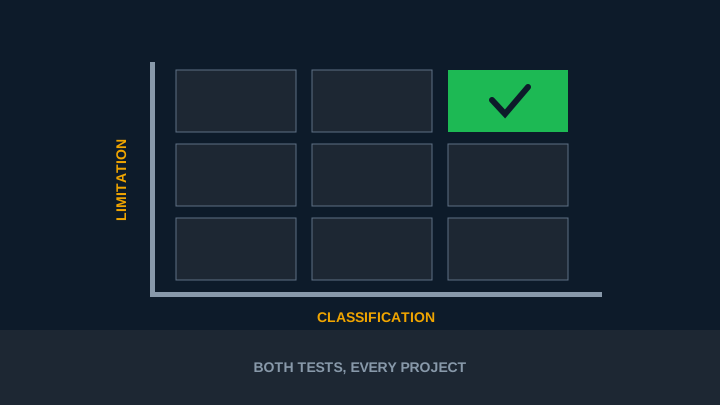
A North Carolina general contractor license carries two separate restrictions, and confusing them is one of the most common ways a licensed contractor ends up outside their license. The first is the classification: what kind of construction you are certified to perform. The second is the limitation: how large any single project may be. They are independent. An Unlimited license with a Residential classification does not authorize a commercial building of any size, and a Building classification carried on a Limited license does not authorize a $2,000,000 warehouse. Every project a licensee takes has to clear both tests, and 21 NCAC 12A .0204(a) states the second plainly: all licenses shall have an appropriate limitation.
Authority:
The five classifications
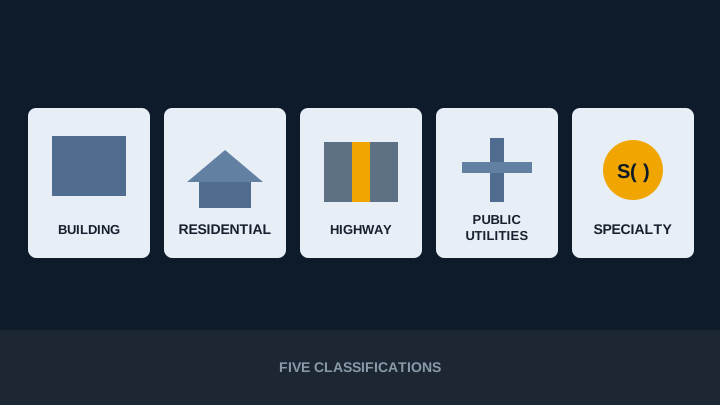
21 NCAC 12A .0202(a) provides that a general contractor shall be certified in one of five classifications: Building Contractor, Residential Contractor, Highway Contractor, Public Utilities Contractor, and Specialty Contractor. The same five appear in the statute at G.S. 87-10(b), which is the provision the Board’s rule implements. Read the two side by side and you will notice the numbering does not match: the statute lists them as (1) building, (1a) residential, (2) highway, (3) public utilities, and (4) specialty, because residential was inserted after the original numbering was fixed. The rule renumbers them cleanly as (1) through (5). Same five classifications, two numbering schemes — worth knowing before you cite a subdivision number to a plans examiner or in correspondence with the Board.
Authority: · N.C.G.S. § 87-10(b)
Building Contractor — the widest reach
The Building classification covers all building construction and demolition activity: commercial, industrial, institutional, and all residential building construction. Its scope is broader than the name suggests. Under .0202(a)(1) it also takes in solar panel installation, parking decks, site work, grading and paving of parking lots, driveways, sidewalks and gutters, storm drainage, retaining and screen walls, accessory structures, and indoor and outdoor recreational facilities including athletic fields, running tracks, bleachers and seating. Critically, it also covers work done under a list of specialty classifications — concrete construction, insulation, interior construction, marine and freshwater construction, masonry, roofing, metal erection, swimming pools and others. A Building Contractor does not need a separate specialty certification to perform work the Building classification already absorbs.
Authority:
Residential, Highway and Public Utilities
The Residential classification is the narrower relative of Building, and its boundary is a code, not a vibe: .0202(a)(2) covers construction and demolition of residential units that are required to conform to the Residential Building Code adopted under G.S. 143-138, together with the site work, driveways, sidewalks and water and wastewater systems ancillary to them. A licensee holding it cannot move sideways into a commercial or institutional project on the strength of project size alone. Highway Contractor covers highway work. Public Utilities Contractor covers water and wastewater systems and the subclassifications of facilities set forth in G.S. 87-10(b)(3) — the subclassifications are in the statute, and .0202(a)(4) directs the Board to issue a license limited to those for which the contractor qualifies. The point for a licensee is not to memorize the subdivisions but to check the certificate: the classification printed on it is the boundary, and it is the Board’s record, not your recollection of what you have historically built, that governs.
Authority: · N.C.G.S. § 87-10(b)
Specialty Contractor and the S( ) notation
The Specialty classification covers work requiring special skill within a defined trade, and the Board writes each specialty in the form S(Concrete Construction), S(Roofing), S(Swimming Pools) and so on. Two things follow. First, a specialty license is a narrow authorization: it permits the named specialty and nothing beside it. Second, because the Building classification already absorbs many of these specialties, the same physical work can be lawful for two contractors holding quite different certificates. A licensee reading a set of drawings should be asking which classification the scope falls into, not whether the crew has done that kind of work before.
Authority:
The three limitations, and the numbers
G.S. 87-10(a1) fixes three limitations by the value of any single project. The holder of a limited license may act as general contractor on any single project with a value of up to seven hundred fifty thousand dollars ($750,000). The holder of an intermediate license may act on any single project with a value of up to one million five hundred thousand dollars ($1,500,000). The holder of an unlimited license may act without restriction as to the value of any single project. Note the unit: it is per project, not per year and not per contract. Splitting one undertaking into two contracts does not create two projects, and the “cost of the undertaking” definition reaches subsequent amendments precisely so that it cannot.
Authority: N.C.G.S. § 87-10(a1)
What the ceiling leaves out
The statutory ceilings are measured on value “excluding the cost of land and any ancillary costs to improve the land.” That exclusion does real work. On a project where an owner has paid substantially for the parcel and for the offsite work that makes it buildable, the figure that counts against a licensee’s limitation can be markedly lower than the number on the development pro forma. The corollary is the trap: a contractor who assumes the exclusion is wider than it is — netting out, say, owner-supplied materials or design fees — will overshoot the limitation while believing there is room. The exclusion is for land and the ancillary costs of improving it, and the safe practice is to compute the figure and keep the computation.
Authority: N.C.G.S. § 87-10(a1)
Fees, in passing
G.S. 87-10(a1) also sets the application fee ceilings, and they track the limitations: not more than one hundred twenty-five dollars ($125.00) for an unlimited license application, one hundred dollars ($100.00) for intermediate, and seventy-five dollars ($75.00) for limited, alongside an examination fee not to exceed one hundred dollars ($100.00) payable to the Board or a provider under contract with it. Fees accompanying any application or examination are nonrefundable. These are statutory maxima rather than a published price list; confirm the current amounts with the Board before advising anyone what an application will cost.
Authority: N.C.G.S. § 87-10(a1)
Working the two axes together
In practice the discipline is a two-line check before signing anything. Line one: does my classification cover this scope of work — and if the scope has a specialty component, is that specialty inside my classification or beside it? Line two: is the project’s value, computed the way the rule computes it, within my limitation? A yes to both is the only combination that authorizes the work. This matters beyond the individual job because the Board treats crossing either line as more than a paperwork problem: allowing a credential to be used on an undertaking for which the user lacks the proper classification or limitation is defined as misconduct. The limitation is not a target to grow into by taking the job first.
Authority:
Traducción de cortesía — la versión en inglés es la oficial del curso.
Dos ejes, no uno
Una licencia de contratista general de Carolina del Norte lleva dos restricciones separadas, y confundirlas es una de las formas más comunes en que un contratista licenciado termina fuera de su licencia. La primera es la clasificación: qué tipo de construcción está certificado para ejecutar. La segunda es la limitación: qué tamaño puede tener cualquier proyecto individual. Son independientes. Una licencia Unlimited con clasificación Residential no autoriza un edificio comercial de ningún tamaño, y una clasificación Building sobre una licencia Limited no autoriza una bodega de $2,000,000. Cada proyecto que toma un licenciatario debe pasar ambas pruebas, y 21 NCAC 12A .0204(a) enuncia la segunda con claridad: todas las licencias tendrán una limitación apropiada.
Las cinco clasificaciones
21 NCAC 12A .0202(a) dispone que un contratista general será certificado en una de cinco clasificaciones: Building Contractor, Residential Contractor, Highway Contractor, Public Utilities Contractor y Specialty Contractor. Las mismas cinco aparecen en la ley, en G.S. 87-10(b), que es la disposición que la regla de la Junta implementa. Ponga las dos lado a lado y notará que la numeración no coincide: la ley las lista como (1) building, (1a) residential, (2) highway, (3) public utilities y (4) specialty, porque residential se insertó después de que la numeración original quedara fijada. La regla las renumera limpiamente de (1) a (5). Las mismas cinco clasificaciones, dos esquemas de numeración — conviene saberlo antes de citar un inciso a un revisor de planos o en correspondencia con la Junta.
Building Contractor — el alcance más amplio
La clasificación Building cubre toda actividad de construcción y demolición de edificios: comercial, industrial, institucional y toda construcción residencial. Su alcance es más amplio de lo que el nombre sugiere. Bajo .0202(a)(1) también abarca la instalación de paneles solares, estacionamientos elevados, trabajo de sitio, nivelación y pavimentación de estacionamientos, entradas de vehículos, aceras y cunetas, drenaje pluvial, muros de contención y de pantalla, estructuras accesorias, e instalaciones recreativas techadas y al aire libre, incluidas canchas deportivas, pistas de atletismo, graderías y asientos. Fundamental: también cubre el trabajo hecho bajo una lista de clasificaciones de especialidad — concrete construction, insulation, interior construction, marine and freshwater construction, masonry, roofing, metal erection, swimming pools y otras. Un Building Contractor no necesita una certificación de especialidad aparte para ejecutar trabajo que la clasificación Building ya absorbe.
Residential, Highway y Public Utilities
La clasificación Residential es la pariente más estrecha de Building, y su límite es un código, no una intuición: .0202(a)(2) cubre la construcción y demolición de unidades residenciales que deben cumplir con el Residential Building Code adoptado bajo G.S. 143-138, junto con el trabajo de sitio, entradas de vehículos, aceras y sistemas de agua y aguas residuales accesorios a ellas. Un licenciatario que la tenga no puede desplazarse hacia un proyecto comercial o institucional apoyándose solo en el tamaño del proyecto. Highway Contractor cubre trabajo vial. Public Utilities Contractor cubre sistemas de agua y aguas residuales y las subclasificaciones de instalaciones establecidas en G.S. 87-10(b)(3) — las subclasificaciones están en la ley, y .0202(a)(4) instruye a la Junta a emitir una licencia limitada a aquellas para las que el contratista califique. Lo importante para un licenciatario no es memorizar las subdivisiones sino revisar el certificado: la clasificación impresa en él es el límite, y es el registro de la Junta, no su recuerdo de lo que ha construido históricamente, lo que rige.
Specialty Contractor y la notación S( )
La clasificación Specialty cubre trabajo que requiere destreza especial dentro de un oficio definido, y la Junta escribe cada especialidad en la forma S(Concrete Construction), S(Roofing), S(Swimming Pools) y así sucesivamente. De ahí se siguen dos cosas. Primero, una licencia de especialidad es una autorización estrecha: permite la especialidad nombrada y nada al lado de ella. Segundo, como la clasificación Building ya absorbe muchas de estas especialidades, el mismo trabajo físico puede ser lícito para dos contratistas con certificados bastante distintos. Un licenciatario que lee un juego de planos debería preguntarse en qué clasificación cae el alcance, no si la cuadrilla ha hecho antes ese tipo de trabajo.
Las tres limitaciones, y las cifras
G.S. 87-10(a1) fija tres limitaciones según el valor de cualquier proyecto individual. El titular de una licencia limited puede actuar como contratista general en cualquier proyecto individual con un valor de hasta setecientos cincuenta mil dólares ($750,000). El titular de una licencia intermediate puede actuar en cualquier proyecto individual con un valor de hasta un millón quinientos mil dólares ($1,500,000). El titular de una licencia unlimited puede actuar sin restricción en cuanto al valor de cualquier proyecto individual. Note la unidad: es por proyecto, no por año y no por contrato. Dividir una obra en dos contratos no crea dos proyectos, y la definición de «cost of the undertaking» alcanza las modificaciones posteriores precisamente para que no pueda hacerlo.
Lo que el techo deja afuera
Los techos legales se miden sobre el valor «excluyendo el costo del terreno y cualquier costo accesorio para mejorarlo». Esa exclusión hace un trabajo real. En un proyecto donde el propietario pagó sustancialmente por la parcela y por el trabajo externo que la hace edificable, la cifra que cuenta contra la limitación de un licenciatario puede ser bastante menor que el número del pro forma de desarrollo. El corolario es la trampa: un contratista que suponga que la exclusión es más amplia de lo que es — descontando, digamos, materiales provistos por el propietario u honorarios de diseño — excederá la limitación creyendo que tiene margen. La exclusión es para el terreno y los costos accesorios de mejorarlo, y la práctica segura es calcular la cifra y conservar el cálculo.
Los aranceles, de paso
G.S. 87-10(a1) también fija los topes de arancel de solicitud, y siguen a las limitaciones: no más de ciento veinticinco dólares ($125.00) para una solicitud de licencia unlimited, cien dólares ($100.00) para intermediate y setenta y cinco dólares ($75.00) para limited, además de un arancel de examen que no exceda cien dólares ($100.00) pagadero a la Junta o a un proveedor contratado por ella. Los aranceles que acompañan cualquier solicitud o examen no son reembolsables. Son máximos legales y no una lista de precios publicada; confirme los montos vigentes con la Junta antes de decirle a alguien cuánto costará una solicitud.
Trabajando los dos ejes juntos
En la práctica la disciplina es una verificación de dos líneas antes de firmar nada. Línea uno: ¿mi clasificación cubre este alcance de trabajo — y si el alcance tiene un componente de especialidad, esa especialidad está dentro de mi clasificación o al lado de ella? Línea dos: ¿el valor del proyecto, calculado como lo calcula la regla, está dentro de mi limitación? Un sí a ambas es la única combinación que autoriza el trabajo. Esto importa más allá del trabajo individual porque la Junta trata cruzar cualquiera de las dos líneas como algo más que un problema de papeleo: permitir que una credencial se use en una obra para la cual el usuario carece de la clasificación o limitación adecuada está definido como conducta indebida. La limitación no es una meta hacia la cual crecer tomando primero el trabajo.
Authority & state references
- N.C.G.S. § 87-10(a1) — Application for license; examination; certificate; renewal — subsection (a1) ⏱ ≈ 2 min read
- N.C.G.S. § 87-10(b) — Application for license; examination; certificate; renewal — subsection (b) ⏱ ≈ 3 min read
- — Classification ⏱ ≈ 10 min read
- — Limitation of License: Eligibility — subsection (a) ⏱ ≈ 2 min read
Tap any citation to read it in the statute reader without leaving this page — about 17 minutes of authority reading is available in this module. Time spent here is instructional time: use it if you want more depth, or if you need additional minutes toward the 200-minute course requirement.
Official text opens on the North Carolina General Assembly site (ncleg.gov) — the source of record for every citation. Read-time figures are estimates.
Independent contractor-education provider. Not affiliated with, endorsed by, or acting for the North Carolina Licensing Board for General Contractors. Education, not legal advice — verify current statutes with the NC General Assembly.